
By Matthew Travers, Co-Founder and President, Lead to Recovery. Published October 26, 2026. Every figure links to its primary source.
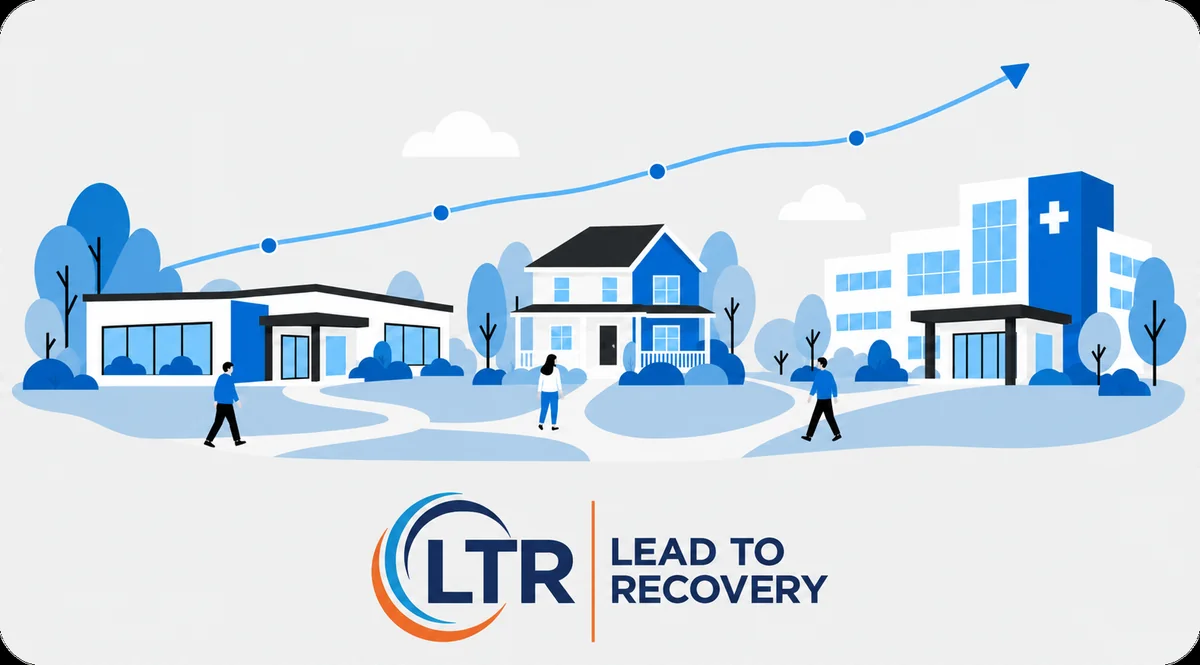
SAMHSA’s National Substance Use and Mental Health Services Survey found 17,829 substance use treatment facilities eligible to respond, 15,953 responded and are included in the data set.
This number isn’t as clear cut as it seems. SAMHSA has a higher number of facilities, but many of those facilities have closed, don’t meet the criteria, or only offer mental health treatment. We’ll break down all the numbers and include sources for each.
From facility counts, ownership, types of care, addiction treatment medications, forms of payment, how many need treatment, counselor workforce, to overdose deaths.
Top Picks
Facilities
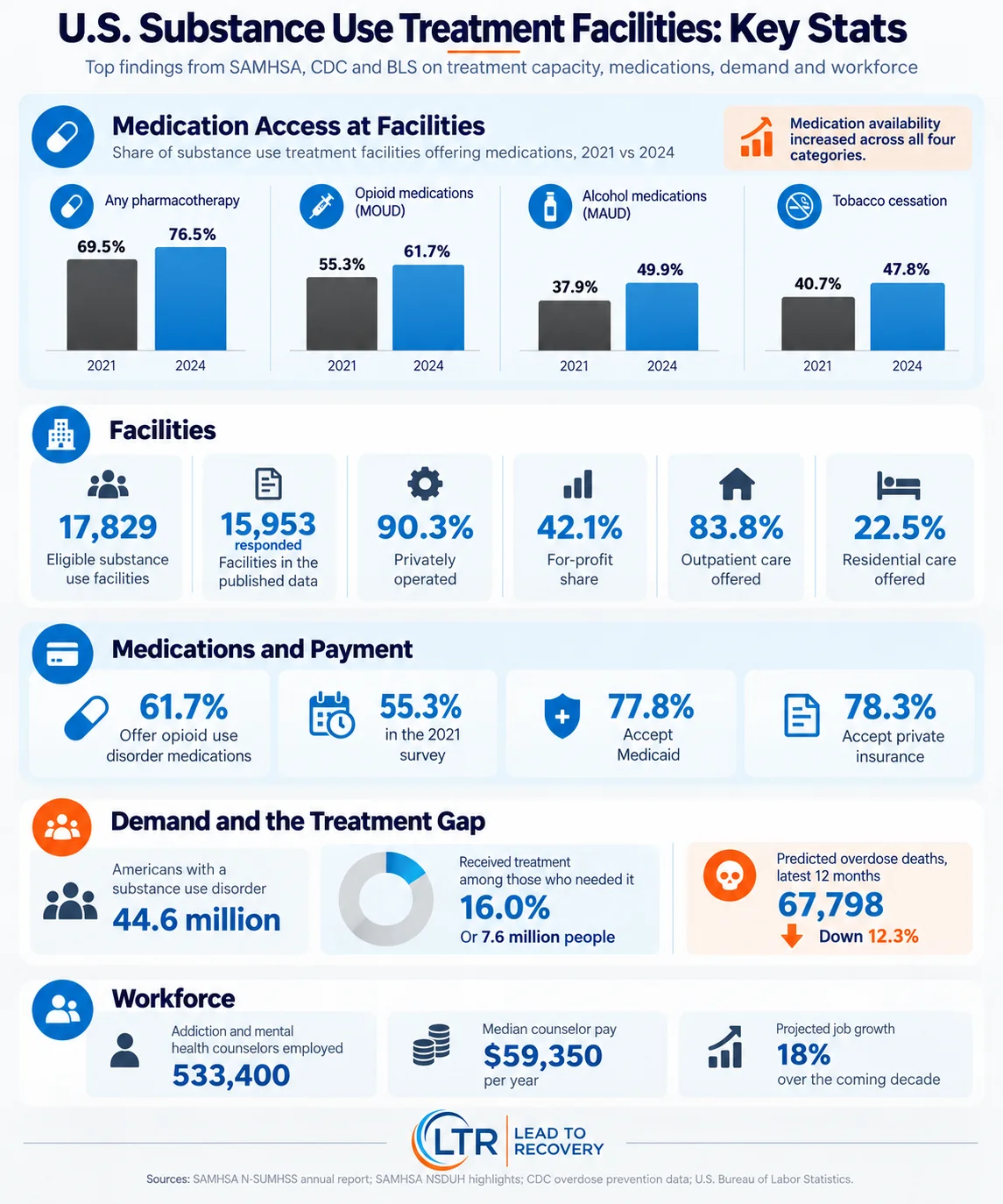
- Substance use treatment facilities: 17,829 eligible to respond to SAMHSA’s latest survey
- Included in data set: 15,953 substance use treatment facilities that responded
- Private facilities: 90.3% of substance use treatment facilities
- For profit facilities: 42.1% of substance use treatment facilities
- Offer outpatient: 83.8% of substance use treatment facilities
- Offer residential: 22.5% of substance use treatment facilities
Treatment Medications & Payments
- Facilities that offer medications for opioid use disorder: 61.7% increased from 55.3% in the 2021 survey
- Take Medicaid: 77.8% of substance use treatment facilities
- Take private insurance: 78.3% of substance use treatment facilities
Need For Treatment
- Americans with a substance use disorder: 44.6 Million age 12+
- Received treatment: 16.0% of people that need treatment, 7.6 Million people
- Predicted overdose deaths, latest 12 months: 67,798 decreasing by 12.3%
Counselor Workforce
How Many Rehab Centers Are There in the US?
There are 17,829 substance use treatment facilities eligible to respond to SAMHSA’s survey and 15,953 that did.
There are a few ways to interpret how many rehab centers are in the US:
| Rehab Center Type | Number | Description | Source (Date) |
|---|---|---|---|
| Total Facilities Known By SAMHSA (Substance Use and Mental Health) | 27,957 | All facilities SAMHSA is aware of | SAMHSA N-SUMHSS Annual Report (2024 Data) |
| Facilities Closed or Not Eligible | 4,009 | Did not qualify for survey | SAMHSA N-SUMHSS Annual Report (2024 Data) |
| Eligible Facilities (All) | 23,948 | Substance use treatment and mental health | SAMHSA N-SUMHSS Annual Report (2024 Data) |
| Eligible Substance Use Treatment Facilities | 17,829 | Best answer for number of rehab centers in US | SAMHSA N-SUMHSS Annual Report (2024 Data) |
| Substance Use Facilities Included In Data Set | 15,953 | Facilities that responded to survey | SAMHSA N-SUMHSS Annual Report (2024 Data) |
| Facilities That Only Offer Substance Use Treatment | 7,114 | No Mental Health treatment | SAMHSA N-SUMHSS Companion Report (2024 Data) |
| Facilities That Offer Substance Use & Mental Health | 8,839 | Included in both counts | SAMHSA N-SUMHSS Annual Report (2024 Data) |
You should use the number of eligible substance use facilities when stating how many rehab centers are in the US.
Many facilities offer mental health treatment in addition to substance use treatment:
- Total facilities that responded: 21,205
- Facilities that offer mental health treatment: 14,091
- Facilities that offer substance use & mental health: 8,839
- Survey response rate: 90.4%
Keep in mind this is a voluntary survey, it lists facilities not businesses or beds.
When using these numbers, always state how many eligible substance use treatment facilities there are when referring to rehab centers, along with the date of the survey.
Who Runs Rehab Centers in the US?
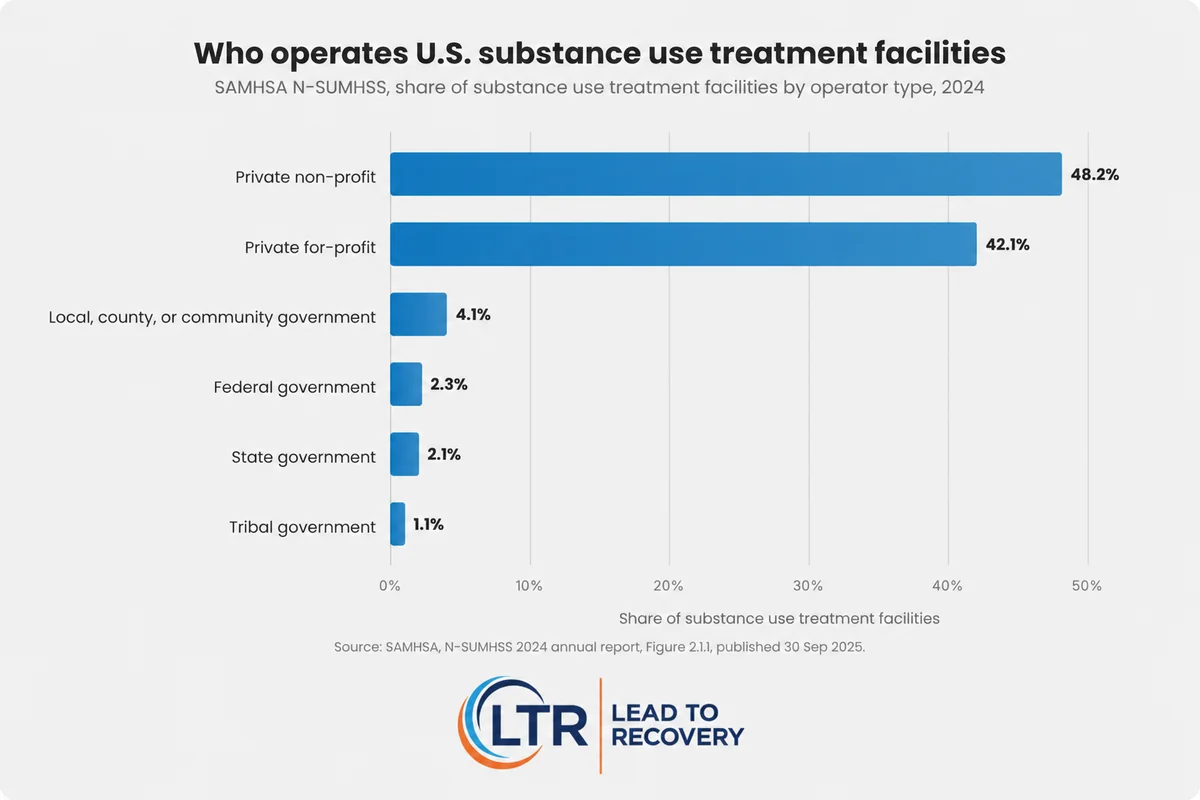
Private facilities account for 90.3% of rehab centers in the US according to SAMHSA’s most recent facility survey.
Almost half of these facilities are run by non-profit organizations and for-profit organizations make up most of the rest.
| Type Of Operator | Percentage of Substance Use Facilities | Number Of Facilities | Source (Date) |
|---|---|---|---|
| Non-Profit | 48.2% | 7,697 | SAMHSA N-SUMHSS (2024 Data) |
| For Profit | 42.1% | 6,724 | SAMHSA N-SUMHSS (2024 Data) |
| Local, County, Community | 4.1% | 655 | SAMHSA N-SUMHSS (2024 Data) |
| Federal Government | 2.3% | 359 | SAMHSA N-SUMHSS (2024 Data) |
| State Government | 2.1% | 331 | SAMHSA N-SUMHSS (2024 Data) |
| Tribal | 1.1% | 176 | SAMHSA N-SUMHSS (2024 Data) |
Less than 1 in 10 rehab centers are operated by a government agency.
For-profit facilities have been growing over the past few years, they accounted for 41.3% of facilities in the 2021 survey and non-profits made up 49.5%.
Types of Rehab Centers in the US
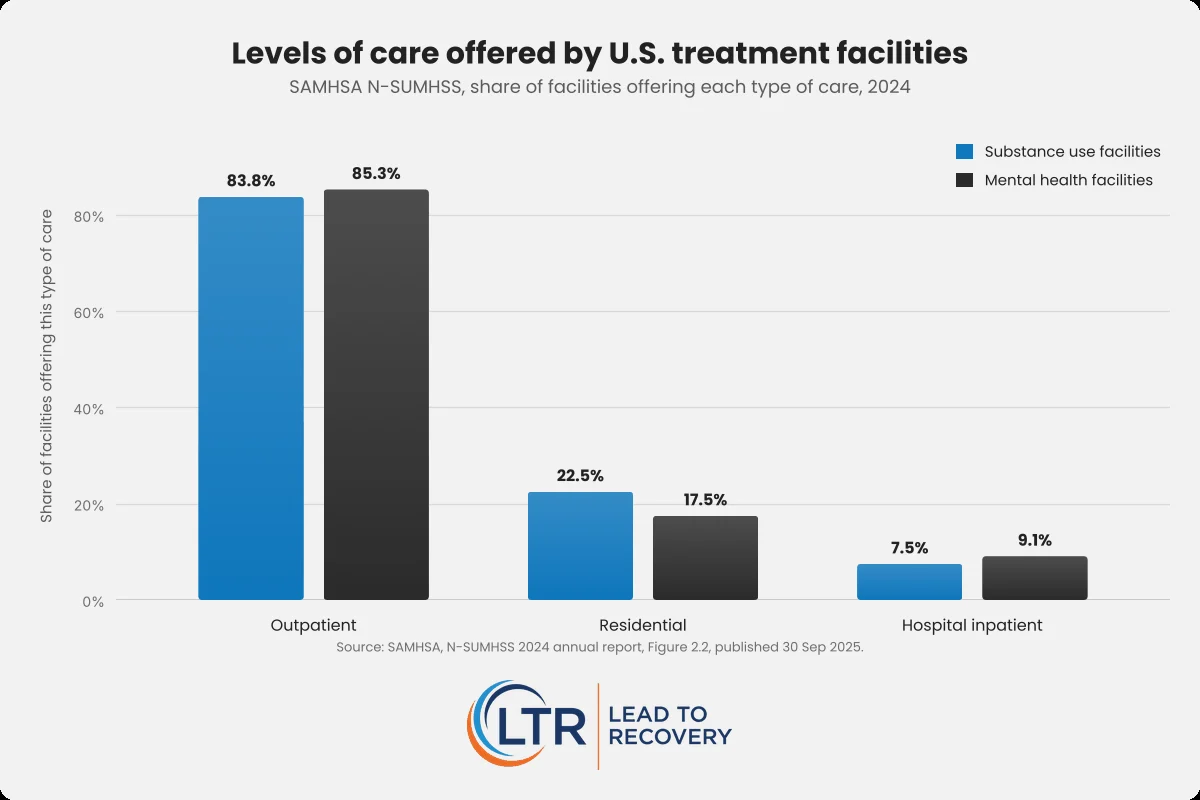
83.8% of rehab centers offer outpatient treatment in the US, 22.5% offer residential treatment, according to SAMHSA.
Facilities can offer multiple types of care, percentages will not equal 100%.
| Types of Care | Substance Use Treatment Facilities | Mental Health Treatment Facilities | Substance Use & Mental Health | Source (Date) |
|---|---|---|---|---|
| Outpatient | 83.8% (13,369) | 85.3% | 91.5% | SAMHSA N-SUMHSS (2024 Data) |
| Residential (not hospital) | 22.5% (3,596) | 17.5% | 18.5% | SAMHSA N-SUMHSS (2024 Data) |
| Hospital Inpatient | 7.5% (1,201) | 9.1% | 8.9% | SAMHSA N-SUMHSS (2024 Data) |
Most rehab centers in the US are outpatient facilities, residential rehab centers make up less than 1 in 4 facilities.
When people think of rehab, they typically imagine staying at a residential facility, but only a small percentage of rehab centers offer this type of treatment.
Most rehab centers in the US offer outpatient treatment.
Do Rehab Centers Offer Treatment Medications?
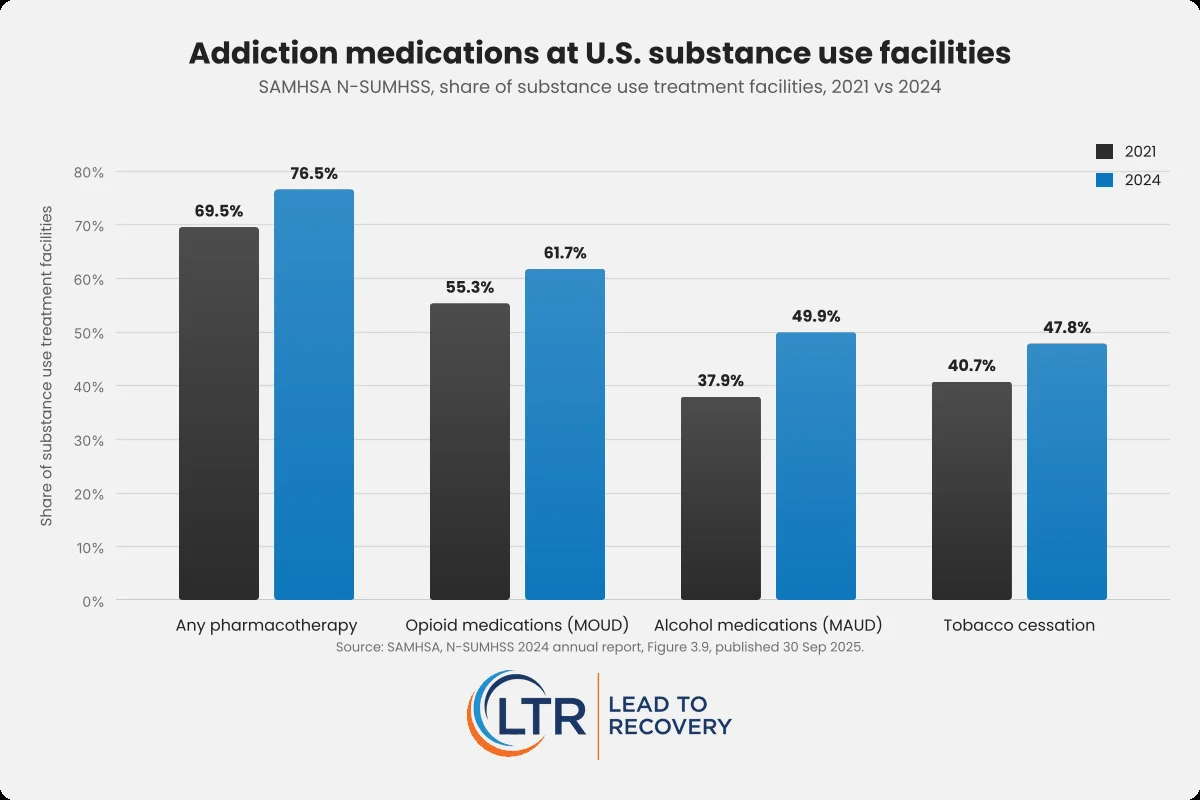
61.7% of rehab centers offer treatment medications for Opioid Use Disorder, that number has increased from 55.3% in the 2021 survey, according to SAMHSA.
Medications used to treat opioid use disorder include Methadone, Buprenorphine, and Naltrexone (Injection). Medications used to treat alcohol use disorder include Disulfiram, Naltrexone, and Acamprosate.
All types of medication saw an increase over the past 4 survey years:
| Treatment Medication | 2021 Survey | Most Recent Year | Source (Date) |
|---|---|---|---|
| Offer Any Treatment Medication | 69.5% | 76.5% | SAMHSA N-SUMHSS (2021 & 2024 Data) |
| Offer Medications For Opioid Use Disorder | 55.3% | 61.7% | SAMHSA N-SUMHSS (2021 & 2024 Data) |
| Offer Medications For Alcohol Use Disorder | 37.9% | 49.9% | SAMHSA N-SUMHSS (2021 & 2024 Data) |
| Offer Tobacco Cessation Medications | 40.7% | 47.8% | SAMHSA N-SUMHSS (2021 & 2024 Data) |
While treatment for alcohol use disorder had the biggest jump, half of facilities do not offer these medications.
Additional stats about offering opioid use disorder medications:
- Opioid Treatment Programs: 13.9% of facilities, or 2,224 rehab centers
- Use Prescribers of Buprenorphine: 52.8% of facilities
- Can Prescribe Naltrexone: 48.6% of facilities
- Accept clients already on opioid use disorder medications: 60.1% of facilities
- Provide Overdose/Naloxone Education: 80.3% of facilities
61.7% of rehab centers offer medications for opioid use disorder.
How Do Rehab Centers Get Paid?
Cash or self-payment is accepted by 89.9% of facilities and private insurance is accepted by 78.3% according to SAMHSA.
Medicare has seen the largest increase, here are all the types of payment:
| Forms of Payment | Previous Year | Most Recent Year | Source (Date) |
|---|---|---|---|
| Cash Or Self Pay | 90.5% | 89.9% | SAMHSA N-SUMHSS (2021 & 2024 Data) |
| Private Insurance | 75.2% | 78.3% | SAMHSA N-SUMHSS (2021 & 2024 Data) |
| Medicaid | 73.2% | 77.8% | SAMHSA N-SUMHSS (2021 & 2024 Data) |
| Medicare | 45.2% | 52.6% | SAMHSA N-SUMHSS (2021 & 2024 Data) |
| Other State Funded Plan | 49.8% | 52.5% | SAMHSA N-SUMHSS (2021 & 2024 Data) |
| Military Insurance From Federal Government | 40.3% | 46.9% | SAMHSA N-SUMHSS (2021 & 2024 Data) |
Almost all rehab centers will take cash, about 1 in 5 do not accept Medicaid.
Rehab Centers that take no form of payment and those that offer free treatment:
- No Form Of Payment: 1.6% of facilities, or 253 rehab centers
- Offer Free Or Low Cost Treatment: 46.3% of facilities
For what rehab costs by payer and level of care, see our rehab cost study.
What Are Rehab Center Credentials and Services?
95.8% of substance use treatment facilities are licensed, certified or accredited in the United States, according to SAMHSA.
Some of the top credentials & services offered at these facilities:
Who Are the Special Programs For?
According to SAMHSA, programs tailored to adult women are the most common, offered at 56.5% of substance use treatment facilities.
| Offer Special Program To | Percentage of Substance Use Facilities | Source (date) |
|---|---|---|
| Women, Adults | 56.5% | SAMHSA N-SUMHSS (2024 data) |
| Men, Adults | 56.0% | SAMHSA N-SUMHSS (2024 data) |
| Young adults | 39.7% | SAMHSA N-SUMHSS (2024 data) |
| Seniors or older adults | 36.9% | SAMHSA N-SUMHSS (2024 data) |
| Adolescent | 25.2% | SAMHSA N-SUMHSS (2024 data) |
Programs that offer specialized programs to adolescents are still low at only one facility in four.
How Many People Need Rehab, and How Many Get It?
There are approximately 44.6 Million Americans who have a substance use disorder in 2025, according to SAMHSA’s National Survey on Drug Use and Health. About 1 in 6 of those who needed treatment received it.
Having a substance use disorder here means meeting the survey’s clinical criteria for one in the past year, not necessarily having a formal diagnosis. Someone who needs treatment could have an SUD or have received treatment in the last year.
Here are some statistics that relate to rehab usage and who needs it:
- Individuals with any Substance Use Disorder: 44.6 Million, which is 15.3% of Americans aged 12 and over
- Alcohol Use Disorder: 25.7 Million
- Drug Use Disorder: 26.0 Million
- Have Alcohol & Drug Use Disorder: 7.1 Million
- Received Treatment that needed it: 16.0%, which equates to 7.6 Million individuals
Is There a Difference in Treatment by Age?
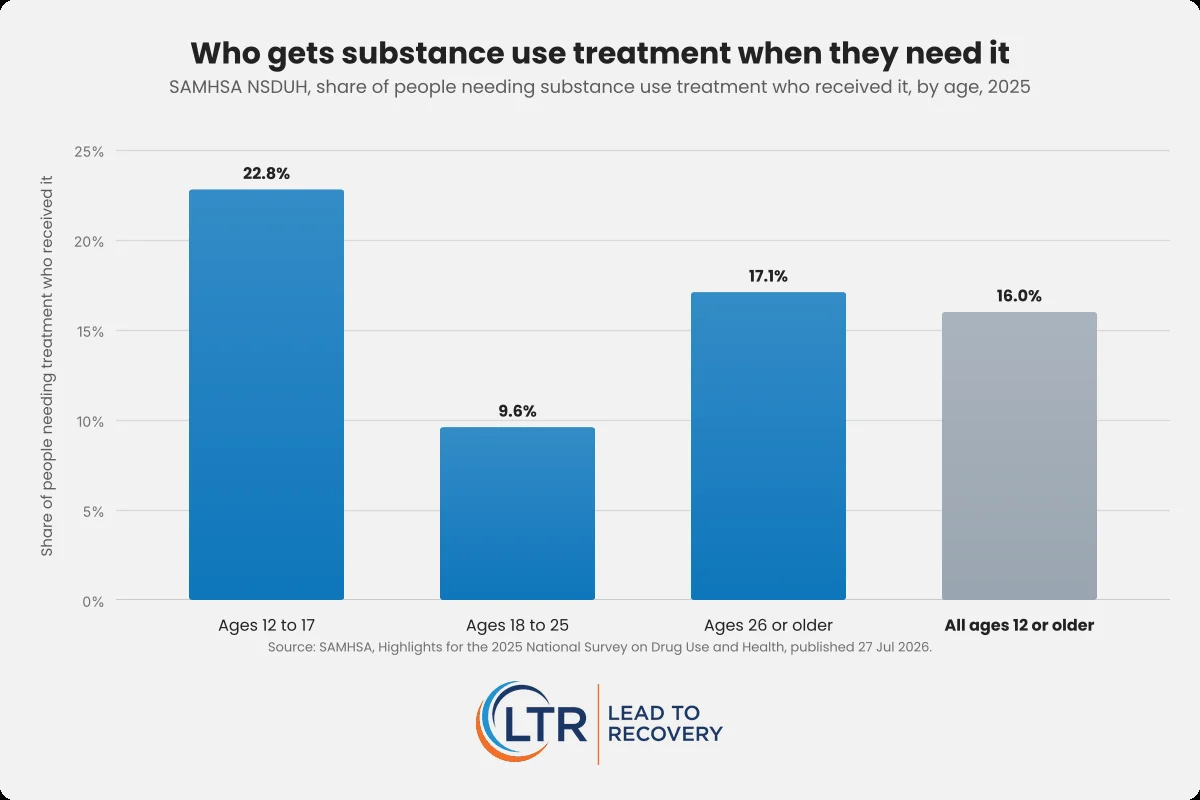
Yes, according to SAMHSA, ages 18-25 had the lowest percentage of those that went to treatment, at only 9.6%.
| Age Group | Individuals With a Substance Use Disorder | Share of Those Needing Treatment Who Received It | Source (date) |
|---|---|---|---|
| Ages 12-17 | 7.4% (1,900,000) | 22.8% (470,000) | SAMHSA NSDUH (2025 data) |
| Ages 18-25 | 23.8% (8,600,000) | 9.6% (845,000) | SAMHSA NSDUH (2025 data) |
| Ages 26+ | 14.9% (34,100,000) | 17.1% (6,200,000) | SAMHSA NSDUH (2025 data) |
| All Ages, 12+ | 15.3% (44,600,000) | 16.0% (7,600,000) | SAMHSA NSDUH (2025 data) |
You can see that the highest age range for someone to have an SUD was ages 18-25, but only 1 in 10 went to treatment.
Why Aren’t More People Going to Treatment?
Out of the 38,100,000 adults who have an SUD and did not receive treatment, 94.5% either didn’t seek treatment or felt they didn’t need it, according to SAMHSA.
- Those 12+ with SUD that did not receive treatment or services: 86.4% of those with an SUD, which equals 38,500,000
- Did not receive treatment, but sought treatment: 0.5%, which is about 187,000 adults
- Believed they should have received treatment, but didn’t seek it: 5.0%, or about 1,900,000 adults
- That have ever had a problem with drugs or alcohol: 30,600,000
- Feel they are recovering from drug/alcohol problem: 73.0%, which equals 22,300,000
The gap is mostly perceived need, not waiting lists: fewer than 200,000 untreated adults actually looked for treatment.
Rates for substance use disorder have gone down, there was a decrease of people that had an SUD from 16.7% to 15.3% for people aged 12 or older, between the 2021 and 2025 surveys.
How Many People Work in the Rehab Field?
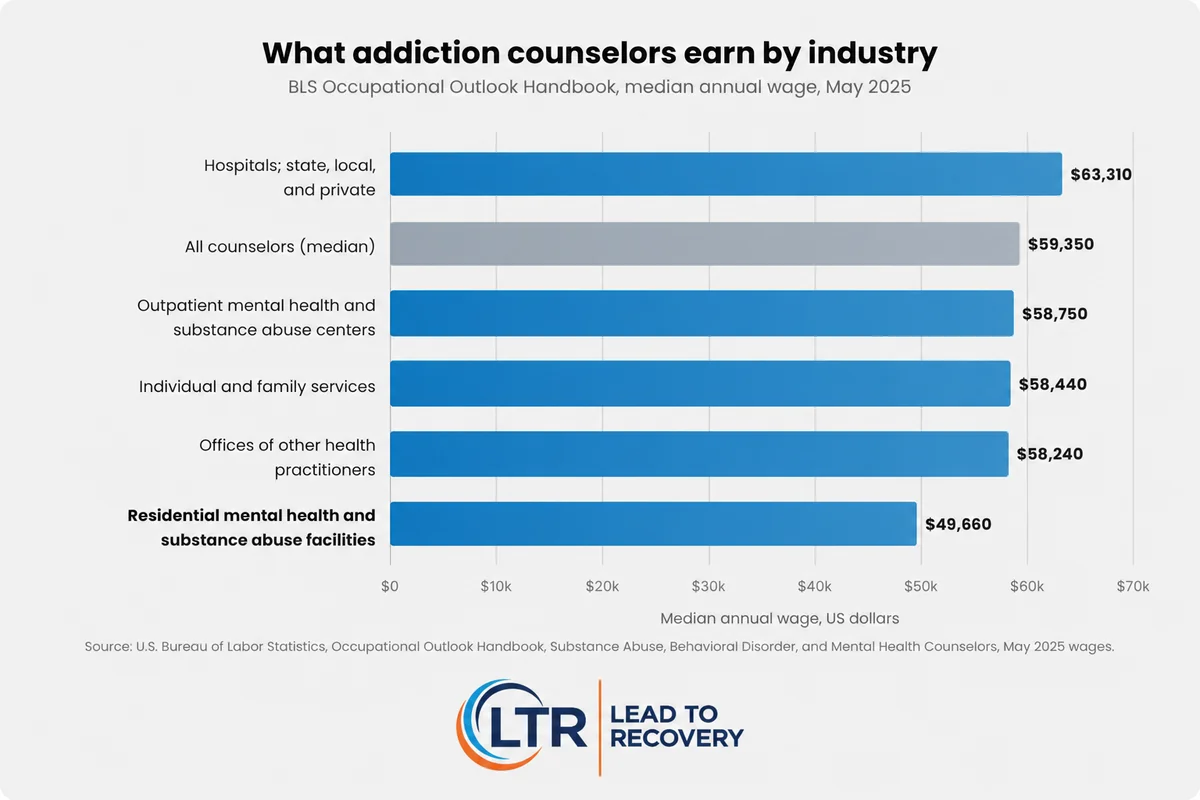
533,400 jobs are held by substance abuse, behavioral disorder, and mental health counselors, with a median salary of $59,350, according to the Bureau of Labor Statistics.
In the information provided by the Bureau of Labor Statistics, addiction counselors are grouped with Mental Health Counselors.
Here is some additional information that may pertain to working in the field:
- Employment is projected to grow by: 18% over the next decade, compared to 3% for all occupations
- Projected employment growth, number of jobs: 98,000
- Projected Openings Per Year: 50,500, includes replacement openings
- The Bottom 10% Make Less Than: $38,940
- Top 10% Make More Than: $97,590
- Median Salary for ALL Occupations: $50,980
What Industries Hire Counselors?
According to BLS, Residential Mental Health and Substance Abuse Facilities pay their counselors the least out of these industries, at only $49,660 a year.
| Industry | % of Employment | Annual Wage | Source (date) |
|---|---|---|---|
| Offices of Other Health Practitioners | 20% | $58,240 | BLS OOH (2025 data) |
| Outpatient Mental Health & Substance Abuse Centers | 16% | $58,750 | BLS OOH (2025 data) |
| Individual & Family Services | 15% | $58,440 | BLS OOH (2025 data) |
| Residential Mental Health & Substance Abuse Facilities | 8% | $49,660 | BLS OOH (2025 data) |
| Hospitals, State, Local, Private | 7% | $63,310 | BLS OOH (2025 data) |
It’s interesting to note that of the five industries, hospitals have the lowest employment but highest wages.
How Many Overdose Deaths Are There in the US?
According to the CDC, there are predicted to be 67,798 overdose deaths in the United States over the latest 12-month period, which is a 12.3% decrease from the previous year.
These are considered provisional death counts, the CDC releases both a reported count and projected count that will be adjusted for deaths still under investigation. This is updated on a monthly basis, 4 months behind.
With more facilities providing Medication Assisted Treatment, there may be a decline in overdose deaths. We can’t say if one caused the other.
Remember, this will fluctuate every month, any citations should mention the 12 month period it covers.
Rehab Industry Statistics FAQs
What Are Considered Rehab Centers?
SAMHSA collects data from facilities that provide Substance Use Treatment, these can range from outpatient facilities to hospitals. There is no separate federal count of ‘rehabs’, because SAMHSA counts every facility that provides substance use treatment, whatever its setting.
How Much Revenue Does the Rehab Industry Produce?
Currently there is no data from a federal statistical agency that would give us this answer. Some private companies that sell research will have this.
How Much Does It Cost to Go to Rehab?
SAMHSA’s facility survey does not collect prices. Our rehab cost study compiles what payers report: Peterson-KFF found that residential treatment facility stays for substance use cost large employer plans an average of $21,900 in 2023. The payment section above shows which forms of payment facilities accept.
Conclusion
As you can see, the rehab industry is much bigger than you may think, it can consist of Outpatient, Residential and Inpatient facilities. Many of these are privately owned and the employment outlook looks good for those in this career path.
There is still more to learn, but these statistics should give you an idea of the size of this industry, and what steps we can take to increase treatment rates.
Turn Rehab Industry Data Into Qualified Calls
There are 17,829 eligible substance use treatment facilities in the US, and they compete for the same searches. Lead to Recovery builds the SEO, PPC and call tracking that turn those searches into qualified calls for your admissions team.
Book a strategy call or call 855-876-7238.