Reviewed by Matthew Travers, Co-Founder and President, account manager on the Arizona engagement featured below.

+61%

admissions year over year for an Arizona mental health center (January to August 2026)

−41%

organic cost per admission in the same campaign ($914 vs. $1,548)

10 of 11

tracked program keywords on Google’s first page

$750

a month is where published SEO pricing starts

Book a Discovery Call

If you prefer to speak with someone
now please call 855-876-7238.

What Is a Mental Health Marketing Agency?

A mental health marketing agency plans and runs the search, advertising and website work that brings people to a mental health program, then turns their inquiries into admissions. For a residential, PHP, IOP or psychiatric program, that means ranking in Google and the map pack for each level of care, running paid search and social ads inside healthcare ad rules, and tracking every call to the admission it produced.

How marketing a treatment program differs from marketing a practice

A solo therapist fills a caseload from a few local searches. A treatment program fills beds and group schedules from families comparing three or four options, payers deciding what they will cover, and referral sources who read the website before they send anyone. The search terms are different (“residential mental health treatment” rather than “therapist near me”), the decision takes longer, and a single admission is worth thousands of dollars. That is why the work is measured in admissions and cost per admission. Lead to Recovery has marketed behavioral health providers, and only behavioral health providers, since 2019.

test

Featured case study

61% More Admissions for an Arizona Mental Health Treatment Center
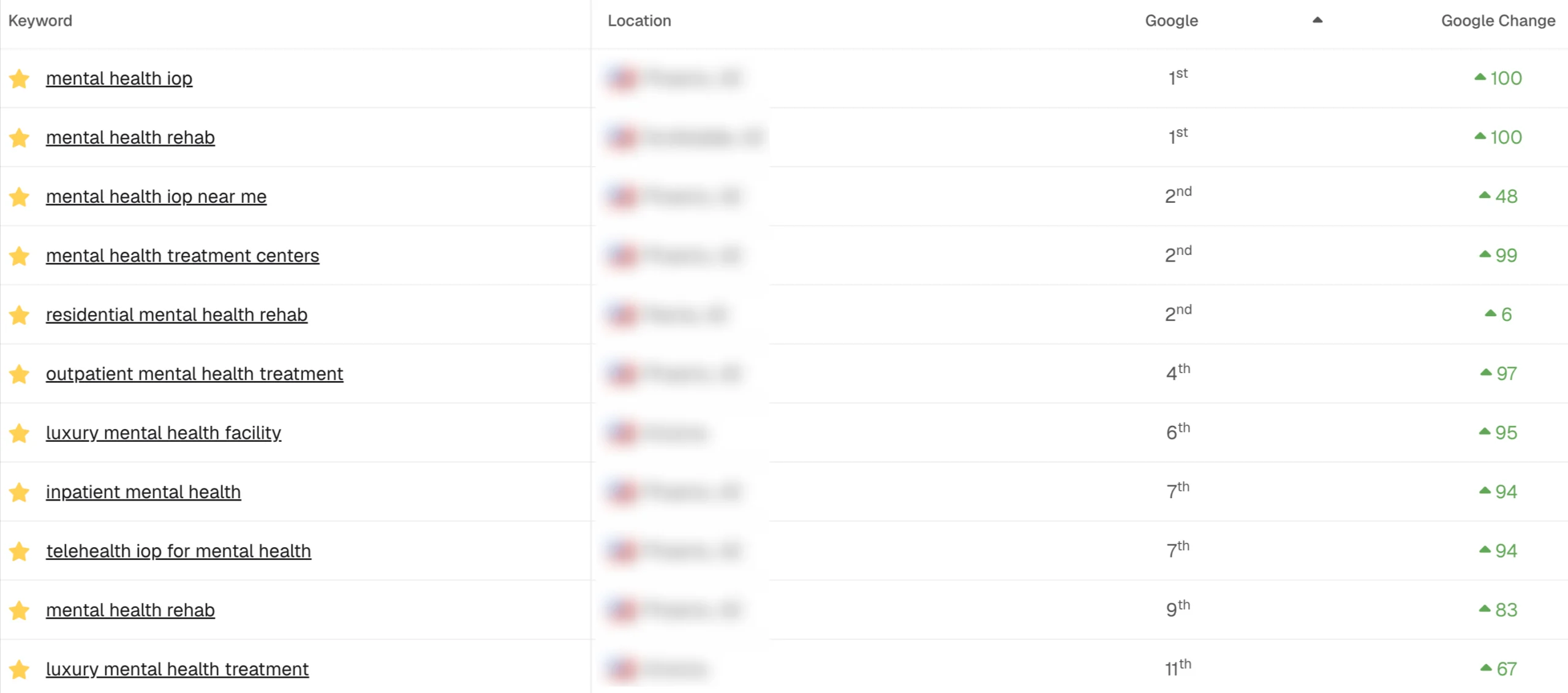
local rank tracking: 10 of 11 mental health keywords on google's first page

Local rank tracking across the Phoenix metro. Seven program keywords climbed 90 positions or more, which means they were not ranking a year earlier.

An Arizona mental health center with residential, IOP, telehealth IOP and psychiatric services hired Lead to Recovery in 2025 to run SEO and paid media as one plan. Comparing January to August 2026 with the same months of 2025:

  • 137 admissions from digital marketing, up from 85
  • Organic admissions up 69% on the same SEO investment, which cut organic cost per admission 41%
  • Qualified PPC calls (two minutes or longer) up from 287 to 808
  • 10 of 11 tracked program keywords on page one, five of them in the top three, including #1 for “mental health iop”

Mental health marketing services

One Plan Across Search, Ads, Website and Tracking

Eight services, run by one team and reviewed together each month, so organic and paid search stop competing for the same patients.

Who we work with

Mental Health Programs We Market

Each program type is searched differently, so each one gets its own pages, campaigns and tracked keywords.

Residential mental health treatment

Private-pay and insured families compare a handful of programs across a wide radius. Program depth, credentials, accreditation and insurance pages decide the call. The Arizona center ranks #2 for “residential mental health rehab”.

PHP and IOP

Searched by level of care and by schedule, so each gets its own page and its own tracked terms. The Arizona center holds #1 for “mental health iop” and #2 for “mental health iop near me”.

Telehealth IOP

Statewide reach with no map pack to lean on, so organic pages and paid search carry the load. State licensure decides where you can admit, and campaigns are limited to the states you serve.

Outpatient programs and group practices

High search volume and heavy competition from directories and health systems. Location pages and a fully built Business Profile for each site win the local searches.

Psychiatry and TMS

Patients search by treatment and by insurance. Each service gets its own page with clear coverage answers. Psychiatry marketing

Eating disorder treatment

Parents, adults and referring clinicians search differently, and each needs different answers on the page. Eating disorder treatment marketing

Dual diagnosis programs

Co-occurring searches split between mental health and addiction phrasing, and any ad that promotes substance use treatment falls under Google’s addiction services policy. Campaigns are split so mental health ads keep running. Addiction treatment marketing

Adolescent and young adult programs

Parents do the searching and compare school support, family therapy and insurance before they call, so the pages answer their questions first.

Marketing Measured in Admissions

Tracking goes live before the first campaign does. CallTrackingMetrics assigns a number to each channel, records and scores every call, and captures each form, including insurance verification. In the Arizona account a call counts as a qualified inquiry when it lasts two minutes or longer, and budget follows the campaigns producing those calls.

Your admissions team marks which inquiries admitted. The monthly report then shows calls, forms, admissions and cost per admission by channel and by program, with rankings and traffic in the same 24/7 dashboard as leading indicators. Response time matters as much as volume; see the speed to lead guide.

What Happens in the First 180 Days

  • Days 1 to 30. Tracking live, Business Profiles rebuilt, technical fixes shipped and paid campaigns launched by program. Paid search produces calls in the first weeks.
  • Days 31 to 90. Program pages published, links earned and landing pages tested. Program terms move toward page one and organic calls begin.
  • Day 91 onward. Organic takes a growing share of admissions and paid budget moves to the terms organic has not reached. In year two, the Arizona center’s organic admissions rose 69% on flat SEO spend.

SEO plans carry a 90-day minimum because nothing meaningful can be judged sooner.

What the audits find

Why Mental Health Marketing Stalls, and How This Plan Avoids It

These four problems are the ones Lead to Recovery’s audits find on programs that have already paid for marketing.

One page trying to rank for every program

A single “services” page cannot rank for residential, IOP and psychiatric searches at once, and directories with a page per program outrank it. Each level of care needs its own page and its own Business Profile service.

Ads judged by clicks

Cheap clicks from people looking for free support fill the report and drain the budget. Judging campaigns by qualified calls, as the Arizona account does with its two-minute threshold, moves spend to the searches that admit.

Tracking that stops at the form

Leadership sees spend and sessions but no admits, and the budget is cut in month four. Call tracking tied to admissions is included in every plan so the decision rests on cost per admission.

Pages written for nobody in particular

Families, payers and referral sources read the same pages. Copy with no credentials, no insurance answers and no named reviewer falls short of Google’s standards for health content and loses the reader.

Compliance as navigation

Built Within Healthcare Advertising Rules

Mental health programs face fewer ad restrictions than addiction treatment, and the ones that apply decide what a campaign can target and track.

Lead to Recovery describes what these rules say and builds within them; your healthcare counsel confirms how they apply to your program.

Published pricing

What Mental Health Marketing Costs

Lead to Recovery publishes its prices, and each plan is scoped on a strategy call. The Arizona engagement combined a national SEO plan with paid search across Google, Microsoft and Meta.

$750

starting price per month, per location

Local SEO

One location and its Business Profile. Built for outpatient practices and single-site IOPs that admit from a drive-time radius.

$1,500

starting price per month

Regional SEO

Several counties or a metro with multiple programs and locations.

$7,500

starting price per month

National SEO

Residential, telehealth and private-pay programs that admit from anywhere.

$1,000

starting price per month

PPC management

Google Ads, Microsoft Ads and Meta campaigns, managed against cost per qualified call.

Conversion rate optimization starts at $1,000 a month and website design at $4,800.

Why Mental Health Programs Choose Lead to Recovery

Behavioral health only, since 2019

Co-founded by Matthew Travers and CEO Sean Bolton, the agency markets addiction, mental health, eating disorder, ABA and sober living providers and no other industry.

Reported in admissions

Call tracking is included in every plan, and the monthly report shows cost per admission by program alongside rankings and traffic.

SEO and paid media under one team

One plan and one monthly review. That is how the Arizona center grew admissions 61% while blended cost per admission held flat.

Published pricing

Plans start at $750 a month and are listed on the pricing page.

Early on AI search

Answer engine and generative engine optimization are standard, and the free AI visibility tool shows how AI assistants describe your program today.

Backed by Lead to Conversion

Founded in 2006 and Inc. 5000 recognized, the sister agency adds design, development and creative depth to every account.

Questions programs ask

Mental Health Marketing Agency FAQs

It plans and runs the marketing that brings people to a mental health program: SEO and Google Business Profile work, paid search and social ads, website design and conversion optimization, content, and the call tracking that ties each admission to its source. Lead to Recovery reports the results in admissions and cost per admission.

Lead to Recovery publishes its pricing. Local SEO starts at $750 a month per location, regional SEO at $1,500 and national SEO at $7,500 a month. PPC management and conversion rate optimization start at $1,000 a month each, and websites at $4,800. SEO plans have a 90-day minimum. See the pricing page.

Paid search produces calls within the first weeks. SEO moves Business Profile visibility in the first 30 days, moves program terms toward page one within 90, and becomes a steady admissions channel between day 90 and day 180. The Arizona center’s largest organic gains came in its second year, when organic admissions rose 69%.

PPC produces inquiries the week it launches and stops when the budget does. SEO takes three to six months to become a channel, then produces admissions at a falling cost. Most programs run both and shift budget toward organic as rankings mature, which is the plan behind the Arizona case study.

Not for mental health services alone. Google and Meta require LegitScript certification for addiction treatment ads, so a dual-diagnosis program needs it for any ad that promotes substance use treatment. Lead to Recovery separates those campaigns so mental health ads keep running. The LegitScript guide covers eligibility and fees.

Campaigns are built so no protected health information reaches analytics or ad platforms, call tracking and recording vendors sign a BAA, and review replies never confirm that someone is a patient. Your counsel confirms how HIPAA applies to your program. See the HIPAA-compliant marketing guide.

Yes. Group practices and psychiatry practices get the same SEO, Business Profile and paid search work, scoped to their locations. Local SEO starts at $750 a month per location, which fits a single-site practice.

Answer engine and generative engine optimization structures program pages, FAQs and third-party listings so AI tools describe your services, locations and credentials accurately. The free AI visibility tool shows what they say about your program today.

Our Case Studies

  • ltr cs dark

    Local SEO and Google Business Profile Optimization for a Pennsylvania-Based Addiction and Mental Health Treatment Center

    When this addiction treatment and mental health center came to Lead to Recovery, they were facing a challenge that’s all too familiar in behavioral health: a quality facility with real clinical expertise, but almost no visibility online.

  • ltr cs light

    Case Study: 382% Organic Growth for a Multi-Location Addiction Treatment Center

    After switching to WordPress and dialing in our local SEO, our locations started showing up in the top 3 for almost every city we serve. The difference in call volume was immediate.

  • ltr cs dark

    Case Study: Rebranding an Outpatient Addiction Treatment Center Followed by Local and Organic SEO

    A Montana treatment center successfully rebranded and expanded its services from intensive outpatient care to a broader, all-ages framework while overhauling its digital presence to maintain market momentum.

Client Testimonials

Content written by mental health marketing expert Matthew Travers

Content written by mental health marketing expert Matthew Travers

Matthew Travers is a seasoned digital marketing leader with 22 years of experience, including the last decade dedicated to addiction treatment and mental health marketing. He is passionate about developing impactful strategies that combine deep expertise in SEO and conversion rate optimization with a focus on aligning business goals to innovative, results-driven solutions.

matthew travers, president of lead to recovery

Matthew Travers

President

Matthew Travers

President

See What a Mental Health Marketing Plan Would Produce for Your Program

Book a strategy call or call 855-876-7238. We will review your rankings, your ad accounts and your call tracking, and show you where the next admissions will come from.