
An Arizona mental health treatment center with residential, intensive outpatient and telehealth IOP programs, plus psychiatric services, hired Lead to Recovery in 2025 to run SEO and paid media together. In the second year of the engagement, the center admitted 137 patients from digital marketing in the first eight months of 2026, up from 85 in the same months of 2025. Eight months in, the center is within nine admissions of its full-year 2025 total. Every call and form is tracked to its source, so each admission in this case study is tied to the channel that produced it.
Written by Matthew Travers, Co-Founder and President, account manager on this engagement.
The problem
A Private-Pay Mental Health Program Competing With Directories and Health Systems
The center runs residential mental health treatment, an intensive outpatient program in person and by telehealth, and psychiatric services including evaluations and TMS. Its patients are largely private pay, which means every admission matters and every family compares several options before calling.
A year before this comparison, the center did not rank in the top 100 for most of the program searches that bring those families in. “Mental health IOP,” “mental health treatment centers” and “inpatient mental health” returned directories, hospital systems and national brands instead.
The brief for year two was to grow admissions across every program while keeping each admission attributable to the channel that produced it.
The solution
SEO and PPC Run as One Admissions Plan
Lead to Recovery ran a national-tier mental health SEO program alongside a paid media program across Google Ads, Microsoft Ads and Meta, built around the center’s levels of care, and managed both against one number: admissions.
SEO built the long-term asset. Each program got its own page and its own set of tracked keywords, the Google Business Profiles were rebuilt around the services the center offers across the Phoenix metro, and the site was structured so AI search tools and Google read the programs the same way.
PPC bought immediate volume where organic had not reached yet, and conversion rate optimization on the paid landing pages turned more of those clicks into calls. Budget moved toward the campaigns producing calls that lasted two minutes or longer, the threshold this account uses to count a qualified inquiry.
The monthly engagement
SEO, Paid Media and CRO, Managed Together
Ten workstreams across SEO, paid media and conversion, reported in one monthly review so the channels support each other instead of competing for the same searches.
SEO
Paid media and CRO
Both channels
The outcome
Results: January to August 2026 vs. the Same Months of 2025
2026 beat 2025 in seven of eight months.
Admissions from digital marketing by month, January to August.
Year over year, January to August
| January to August | 2025 | 2026 | Change |
|---|---|---|---|
| Total admissions | 85 | 137 | +61% |
| Organic admissions | 62 | 105 | +69% |
| Organic cost per admission | $1,548 | $914 | −41% |
| PPC calls, 1 minute or longer | 474 | 1,339 | +182% |
| PPC calls, 2 minutes or longer | 287 | 808 | +182% |
| PPC admissions | 23 | 32 | +39% |
| PPC cost per lead | $234 | $186 | −21% |
| Total tracked calls (organic + PPC) | 1,078 | 1,944 | +80% |
Search visibility
From Unranked to Page One for the Center’s Core Programs
Ten of the 11 tracked program keywords now rank on Google’s first page, and five are in the top three. Seven climbed 90 positions or more, which means they were not ranking at all a year earlier.
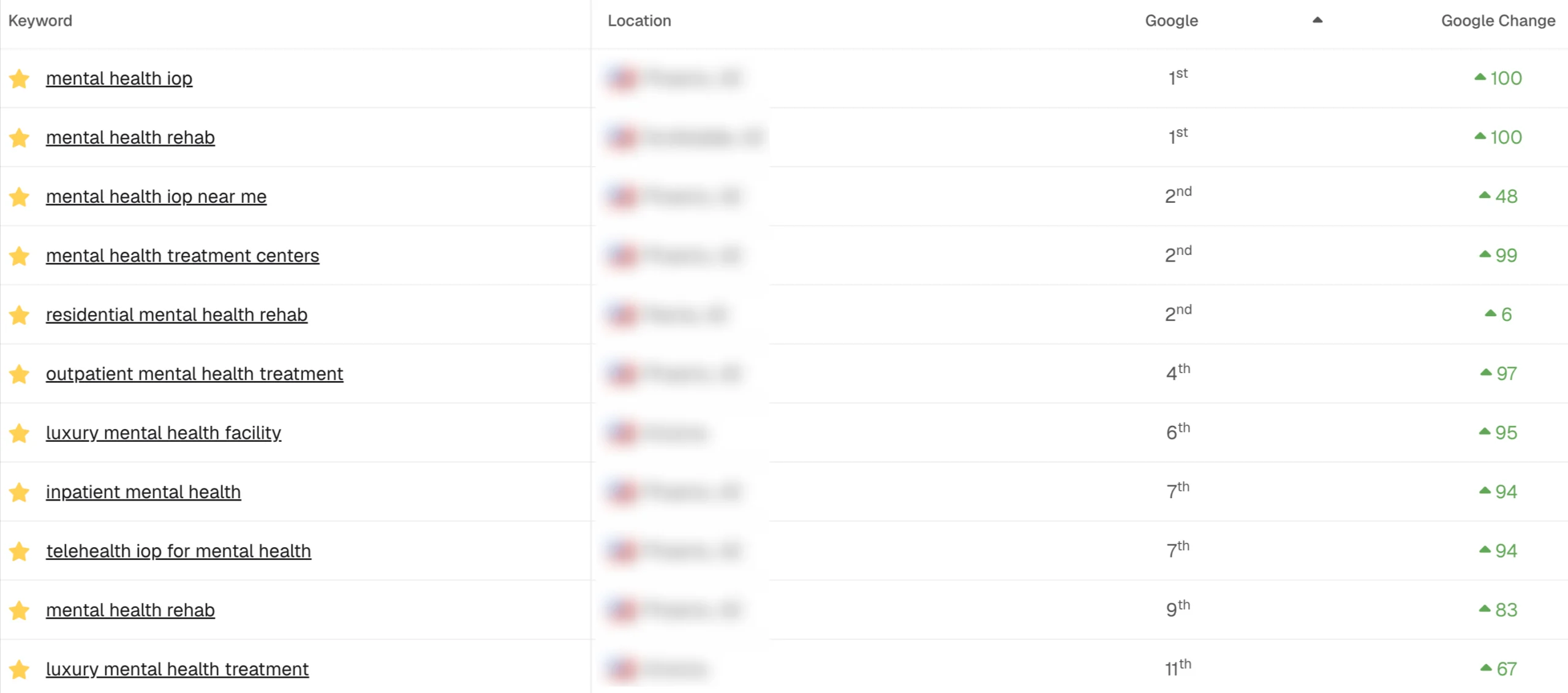
Local rank tracking for searches across the Phoenix metro. The “Google Change” column shows year-over-year movement; a gain of 94 to 100 positions means the keyword was not ranking a year earlier.
The cost side
Why Blended Cost per Admission Held Steady While Admissions Grew 61%
Blended cost per admission across all paid and organic channels held almost exactly flat, from $2,564 to $2,578, while admissions grew 61%. That was a deliberate trade. In 2026 the center chose to scale paid media to fill beds faster, more than doubling paid investment. The larger account produced 2.8 times as many qualified calls at a lower cost per lead, but a smaller share of those calls became admissions, so PPC cost per admission rose from about $5,300 to $8,040.
Organic search carried the efficiency. With SEO spend unchanged, organic cost per admission fell 41% and absorbed the added paid cost. The 52 additional admissions cost about $2,600 each in added spend, for a private-pay program where one residential admission is worth many times that.
The plan for the rest of 2026 is to let the organic rankings carry more of the volume, so paid spend can hold flat while admissions keep growing.
Why it worked
Four Decisions Behind the Numbers
Conclusion
In its second year with Lead to Recovery, an Arizona mental health treatment center grew admissions from digital marketing 61% through August and cut organic cost per admission by 41%, while blended cost per admission held flat. Ten of its 11 core program keywords now rank on Google’s first page, which gives the center a growing share of admissions it does not pay for by the click. See how Lead to Recovery markets mental health programs, from residential care to psychiatry.