Problem:
An addiction treatment center was relying on a basic “Contact Us” page as its primary landing page for paid traffic. Upon analysis, several user experience and conversion issues were identified:
Above-the-fold confusion: On larger desktop screens, the design gave the impression that there was no content beyond what initially appeared. No visual cue (such as an arrow or button) prompted users to scroll.
Inefficient content layout: Excessive whitespace and padding pushed key content out of view, reducing immediate engagement.
Lack of mobile call-to-action: On mobile devices, there was no visible phone number or “Get Help” button in the top section of the page. This lack of a clear CTA hindered urgency and accessibility for users seeking help.
These usability gaps likely contributed to missed conversion opportunities, especially from mobile traffic and users unfamiliar with navigating such layouts.
Solution:
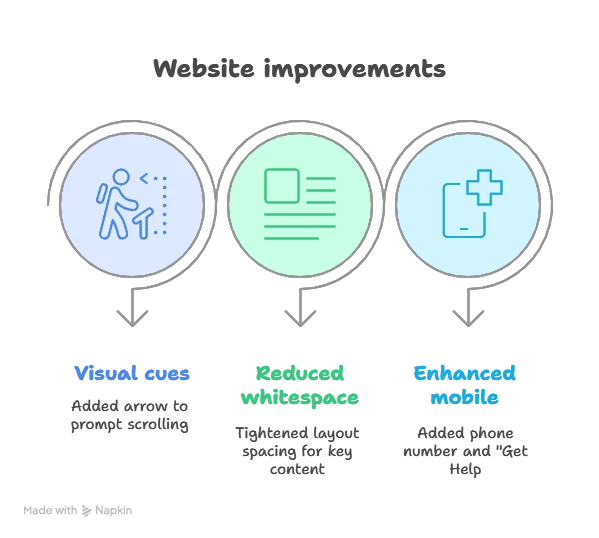
On May 20, 2025, a series of conversion-focused design optimizations were implemented:
These changes were designed to remove friction and encourage action, especially on mobile, where the urgency for treatment is often highest.
Outcome
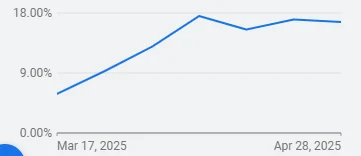
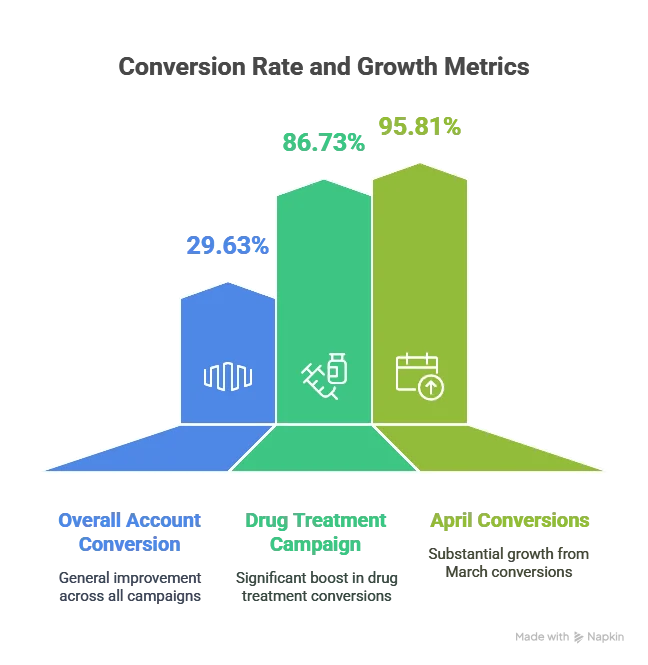
The optimizations delivered significant performance improvements:
First 30 Days Post-Launch:
Month-Over-Month Growth:
Conclusion
These results highlight how simple, strategic design changes, especially around mobile usability and CTA visibility, can have a dramatic impact on campaign performance in the addiction treatment space.